Downsizing in Colorado Springs: Which Type of Home Is Right for Your Next Chapter?
Your kids have moved out, half the bedrooms in your house sit empty, and you're starting to wonder why you're still maintaining a home that's much bigger than you need.
Or maybe it's the stairs. After years of going up and down multiple levels, the idea of having everything you need on one floor is sounding pretty appealing.
And then there's the financial side. If you've owned your Colorado Springs home for years, you might have enough equity to purchase your next property with cash.
But here's the question: What should you actually downsize into?
Downsizing in Colorado Springs isn't just about finding a smaller house. It's about finding a home that fits your lifestyle today while making sure the financial side of your move makes sense.
At The Peña Team, we help homeowners navigate this exact transition. And one thing we always encourage people to remember is that downsizing shouldn't mean giving up everything you enjoy about your current home.
Let's look at three popular downsizing options, their advantages and trade-offs, and how your existing home equity could help you make your next move.

1. Ranch-Style Homes: Simplify Your Life With Main-Level Living
OPTION ONE
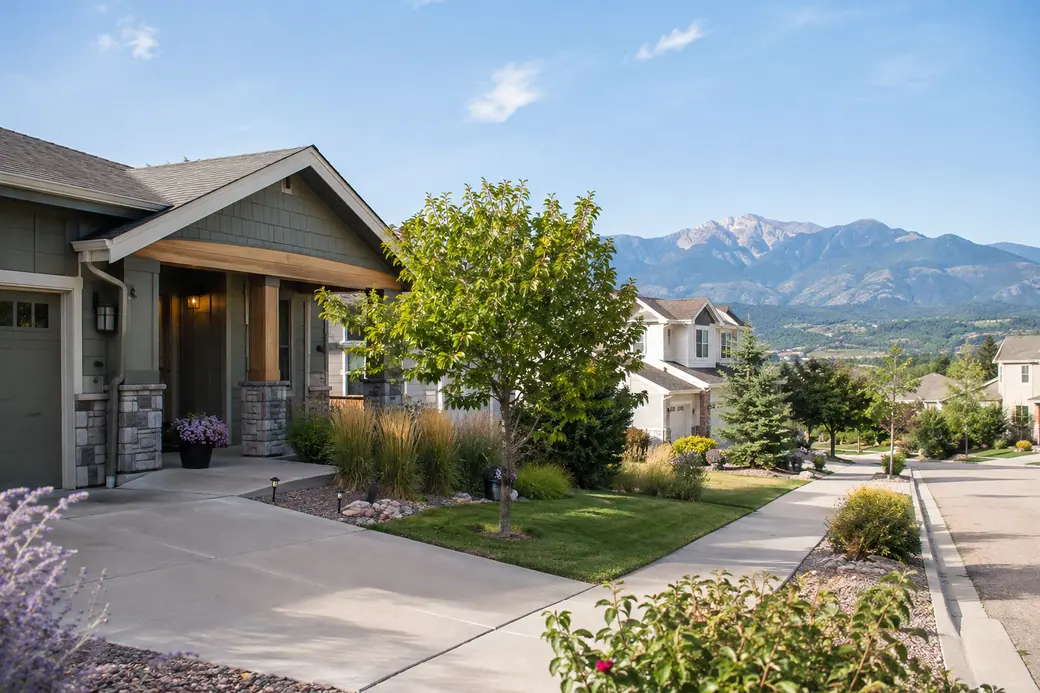
For many homeowners considering downsizing in Colorado Springs, a ranch-style home is the first option that comes to mind.
And for good reason.
If your current house has bedrooms upstairs, laundry on another level, and a basement you rarely use, moving into a home where your daily activities happen on one floor could make a significant difference.
Why a Ranch Home Might Be Right for You
A well-designed ranch can offer:
-
A primary bedroom on the main level
-
Convenient access to the kitchen, laundry, and living areas
-
Fewer stairs to navigate throughout the day
-
A layout that may be easier to manage as your needs change
-
Enough room for guests without maintaining multiple unused bedrooms
If you're thinking about how you want to live five, ten, or fifteen years from now, main-level living may be worth prioritizing.
The Catch: Ranch Doesn't Always Mean Low Maintenance
Here's something homeowners sometimes overlook.
Just because a house is a ranch doesn't mean it's automatically easier to maintain.
You might find a smaller ranch-style home that still has a large yard, aging mechanical systems, or exterior maintenance responsibilities similar to your current property.
Some ranch homes also have finished basements. If you plan to use that additional living space regularly, stairs could still be part of your daily routine.
Before buying, ask yourself:
-
Can I comfortably handle my daily routine on the main level?
-
Is there enough storage for the things I want to keep?
-
Will I have room for family and friends to visit?
-
How much yardwork and exterior maintenance will this home require?
The takeaway: A ranch-style home can be an excellent choice if reducing stairs is your biggest priority. Just make sure the entire property, not only the floor plan, supports the lifestyle you want.
2. Smaller Two-Story Homes: Less Space Without Giving Up Your Preferred Layout
OPTION TWO
Not everyone who wants to downsize needs to eliminate stairs.
In fact, a smaller two-story home might be a better fit than you initially expect.
Imagine moving from a large five-bedroom house with multiple living areas into a more manageable three-bedroom home.
You still have a comfortable place to entertain, a guest bedroom for visiting family, and maybe even a dedicated office.
But you're no longer maintaining all those extra rooms.
Why a Smaller Two-Story Home Makes Sense
This option may be appealing if you want:
-
Less overall square footage
-
Separate spaces for sleeping and entertaining
-
A dedicated home office
-
A guest bedroom for visiting children or grandchildren
-
A familiar layout without the responsibilities of a much larger property
A smaller two-story home may also give you additional choices when searching for properties throughout Colorado Springs and surrounding communities.
When a Two-Story Home Might Not Work
The biggest drawback is obvious: You're still dealing with stairs.
If your primary reason for moving is to avoid climbing stairs every day, a smaller two-story home may not actually solve your problem.
But if your goal is simply to eliminate unnecessary rooms and reduce maintenance, it could be exactly what you need.
Think about your current routine.
Do you actually mind having bedrooms upstairs? Or are you tired of maintaining an entire basement and several rooms nobody uses?
Those are two very different reasons to downsize.
The takeaway: Don't eliminate two-story homes from your search simply because you're downsizing. Focus on how much space you need and how you prefer to use it.
3. Newer Low-Maintenance Homes: More Freedom, Fewer Responsibilities
OPTION THREE
What if your biggest goal isn't necessarily a smaller home?
What if you simply want to spend less time taking care of your house?
For some homeowners, this is the most appealing downsizing option.
Maybe you're tired of maintaining a large yard. Maybe you don't want to spend weekends tackling repairs and projects. Or maybe you'd rather have a home that's easier to leave behind when you travel.
A newer, lower-maintenance property could offer that flexibility.
What Types of Low-Maintenance Homes Should You Consider?
Depending on your preferences and budget, you might explore:
-
Smaller newer single-family homes: Updated finishes, practical layouts, and potentially fewer immediate repair concerns.
-
Patio homes: Properties that may offer more manageable outdoor spaces and simpler maintenance arrangements.
-
Homes in HOA communities: Some associations handle specific exterior maintenance or landscaping responsibilities, depending on their rules and services.
These options can be especially appealing when your goal is to simplify your lifestyle without sacrificing comfort.
Understand What You're Actually Paying For
There's an important distinction between low maintenance and maintenance-free.
Even newer homes require upkeep.
And an HOA doesn't automatically mean someone else handles every exterior responsibility.
Before purchasing, review exactly what the association covers, what remains your responsibility, and how much you'll pay in monthly or annual fees.
You'll also want to consider the property's overall condition, layout, and long-term suitability.
A Smaller Home Isn't Always a Cheaper Home
This is one of the biggest surprises for homeowners downsizing in Colorado Springs.
You might sell a larger, older house and discover that a smaller, newer property costs nearly as much, or potentially more.
Why?
Because you're not just purchasing square footage.
You're paying for the location, design, condition, convenience, and lifestyle the property provides.
A smaller home with a functional layout and fewer maintenance responsibilities may be worth more to you than a larger home filled with unused space.
The takeaway: If reducing maintenance is your top priority, don't focus exclusively on the purchase price or square footage. Evaluate how much time, money, and effort your next home will require.
Which Downsizing Option Is Best?
Here's a simple comparison to help you narrow your choices.
|
Home Type |
Best For |
Main Trade-Off |
|---|---|---|
|
Single-level ranch |
Homeowners who want fewer stairs and main-level living |
May still have significant yardwork or maintenance |
|
Smaller two-story |
Homeowners who want less space but prefer separate living areas |
Stairs remain part of daily life |
|
Newer low-maintenance home |
Homeowners who want fewer upkeep responsibilities |
Higher purchase price or HOA fees may offset savings |
There's no universal winner.
The right home depends on what you're hoping to change about your everyday life.
And once you know what type of property makes sense, it's time to consider the financial side of your move.
How Your Home Equity Can Change Your Downsizing Options
If you've owned your Colorado Springs home for a long time, there's a good chance your financial position looks different today than it did when you first purchased it.
Maybe you've paid down a significant portion of your mortgage.
Maybe your home is completely paid off.
Or perhaps you've accumulated enough equity that purchasing your next property with cash is a realistic possibility.
That can change the entire downsizing conversation.
What Happens When You Have Significant Home Equity?
Home equity is the difference between your property's market value and what you still owe on it.
For example, imagine your current home could sell for $650,000 and you have a remaining mortgage balance of $100,000.
That would give you approximately $550,000 in gross equity.
Of course, you'll still need to account for selling expenses and other applicable costs before determining how much money you'd actually receive.
But depending on your replacement home's price, that equity could give you substantial purchasing flexibility.
You might be able to purchase a smaller home with a much lower mortgage balance, or potentially without a mortgage at all.
Why Buying Your Next Home With Cash Can Be an Advantage
If you're in a position to purchase with cash, you may have certain advantages when negotiating.
For example:
-
You won't need mortgage approval to complete the purchase.
-
You may be able to offer the seller greater financing certainty.
-
You could have more flexibility when structuring your offer.
-
Depending on the property and competing offers, your cash position may strengthen your negotiating opportunities.
However, cash doesn't automatically guarantee a better deal.
Every seller has different priorities, and desirable homes can still attract significant competition.
It's also important not to use every available dollar simply because you can.
The goal of downsizing should be greater financial flexibility, not putting yourself in a position where all your available resources are tied up in your next house.
Should You Sell Your Current Home Before Buying Your Next One?
This is often where downsizing starts to feel complicated.
You might have enough equity to purchase your next home outright, but that equity is still tied up in the house you're currently living in.
So how do you get from one property to the next?
There are three primary approaches worth considering.
Option 1: Sell Your Current Home First
Selling first gives you a clearer understanding of how much money you'll have available for your next purchase.
You can establish your budget using the actual proceeds from your sale rather than estimates.
The downside is that you may need temporary housing if you haven't found your replacement property.
Option 2: Buy Your Next Home First
If your financial resources allow it, buying first can make the physical move much easier.
You can purchase your next home, move in, and then prepare your previous property for sale.
However, you need to be comfortable with the possibility of owning two properties temporarily.
That includes understanding what happens if your existing home takes longer to sell than expected.
Option 3: Coordinate Both Transactions
Another possibility is making your next purchase contingent on selling your existing home.
This can help homeowners who need their sale proceeds to fund the next purchase.
However, contingent offers can introduce additional timing and negotiation challenges.
None of these approaches is automatically the best choice.
For a more detailed breakdown, read our guide to downsizing in Colorado Springs and deciding whether to sell or buy first.
And if your biggest concern is finding yourself without a replacement property, our article on what happens if your Colorado Springs home sells before you find your next one explains additional considerations.
Where Should You Look for Downsizing Homes Near Colorado Springs?
Finding the right downsizing property may require looking beyond your current neighborhood.
Your ideal location depends on the type of home you're seeking, the amount of maintenance you're comfortable with, and the lifestyle you want.
For example, someone moving from a larger property in Black Forest might want to explore homes with smaller lots and fewer outdoor responsibilities.
A homeowner in Monument or Palmer Lake might prefer to stay near familiar amenities while looking for a more manageable floor plan.
Others may want to compare options in Falcon, Peyton, Fountain, Pueblo West, Woodland Park, or Larkspur.
Rather than assuming one community is better for downsizing, consider what matters most to you:
-
Proximity to family and friends
-
Access to shopping, restaurants, and everyday necessities
-
Yard size and outdoor maintenance
-
Main-level living options
-
Home condition and long-term upkeep
-
Overall housing expenses
Our guide to 10 things to know before moving to Colorado Springs offers additional perspective on how different locations and property characteristics can affect your housing decisions.
Don't Forget the True Cost of Your Next Home
A smaller home doesn't necessarily mean smaller monthly expenses.
Before purchasing, evaluate the complete cost of ownership.
That includes:
-
Property taxes
-
Homeowners insurance
-
HOA fees, if applicable
-
Utilities
-
Maintenance and repairs
-
Any remaining mortgage payments
-
Cash reserves after closing
This is particularly important when comparing older properties with newer homes in communities that have different tax structures or association fees.
For additional budgeting considerations, explore our Cost of Living in Colorado Springs (2026 Guide).
Your Practical Downsizing Checklist
Before listing your current home or making an offer on a replacement property, work through these questions.
Start with your lifestyle.
-
What do I want to change about my current living situation?
-
Do I want fewer stairs, less square footage, or less maintenance?
-
Which features do I want to keep, such as a guest room, office, or entertaining space?
-
Which locations fit my daily routine?
Then evaluate your finances.
-
What could my current home realistically sell for?
-
How much equity might I have after selling expenses?
-
What will my replacement home cost, including ongoing expenses?
-
Could I purchase with cash, and how much should I keep in reserve?
-
Would selling first, buying first, or coordinating both transactions make the most sense?
Answering these questions before making a move can help you avoid unnecessary pressure later.
Frequently Asked Questions About Downsizing in Colorado Springs
1. Is downsizing in Colorado Springs a good financial decision?
It can be, but it depends on your specific situation.
Moving into a smaller property may reduce certain expenses, but newer homes, desirable locations, property taxes, and HOA fees can affect your overall costs.
Compare the full financial picture rather than assuming a smaller house will automatically save money.
2. Is a ranch-style home better for downsizing?
A ranch-style home can be a great option if you want to reduce stairs and keep most daily activities on one level.
However, ranch homes aren't necessarily low maintenance. Consider yard size, property condition, storage, and how much of the home you'll actually use.
3. Can I use the equity in my current home to purchase my next home with cash?
Potentially, yes.
If your current home has substantial equity, the proceeds from selling it may allow you to purchase another property outright.
The amount available will depend on your sale price, remaining mortgage balance, selling expenses, and other financial considerations.
4. Are newer homes better for downsizing?
Newer homes can be appealing because of their layouts, finishes, and potentially fewer immediate repair needs.
But newer doesn't mean maintenance-free, and a smaller newer home may cost more than an older, larger property.
Evaluate the total ownership costs and maintenance responsibilities before deciding.
5. Should I buy my next home before selling my current house?
That depends on your finances and priorities.
Buying first may allow you to move only once and avoid rushing into a replacement property. Selling first can provide greater certainty about your available funds.
If you need your current home's equity to complete the purchase, coordinating the transactions may be another option.
6. When should I start planning to downsize?
Ideally, before you're ready to list your home.
Early planning gives you time to understand your property's potential value, compare replacement homes, evaluate your finances, and decide how to coordinate both transactions.
You don't have to be ready to move immediately to start exploring your options.
Your Next Home Should Fit the Life You're Living Now
Downsizing in Colorado Springs isn't about giving up the home you've worked hard for.
It's about deciding what you want your next chapter to look like.
Maybe that's a single-level ranch where you don't have to think about stairs.
Maybe it's a smaller two-story home with enough room for family visits but fewer unused spaces.
Or maybe it's a newer, low-maintenance property that gives you more time to travel, enjoy Colorado, and spend your weekends doing something other than yardwork.
And if you've built substantial equity in your current home, you may have more financial flexibility than you realize.
The best downsizing decision isn't necessarily the one that gets you the smallest or cheapest house. It's the one that gives you the right home, a manageable financial position, and a smoother transition.
Thinking About Downsizing? Let's Talk Through Your Options.
At The Peña Team, we understand that moving from a longtime home is a major decision.
Whether you're wondering what your current home is worth, trying to decide which type of property to buy, or figuring out how to coordinate selling and purchasing, we're here to help you build a plan that makes sense.
You don't need to have everything figured out before reaching out.
Let's start with a conversation about your home, your goals, and what you want your next chapter to look like.
Contact The Peña Team
Phone: (719) 204-5246
Email: homes@thepenateam.com
Website: https://thepenateam.com
Categories
Recent Posts